


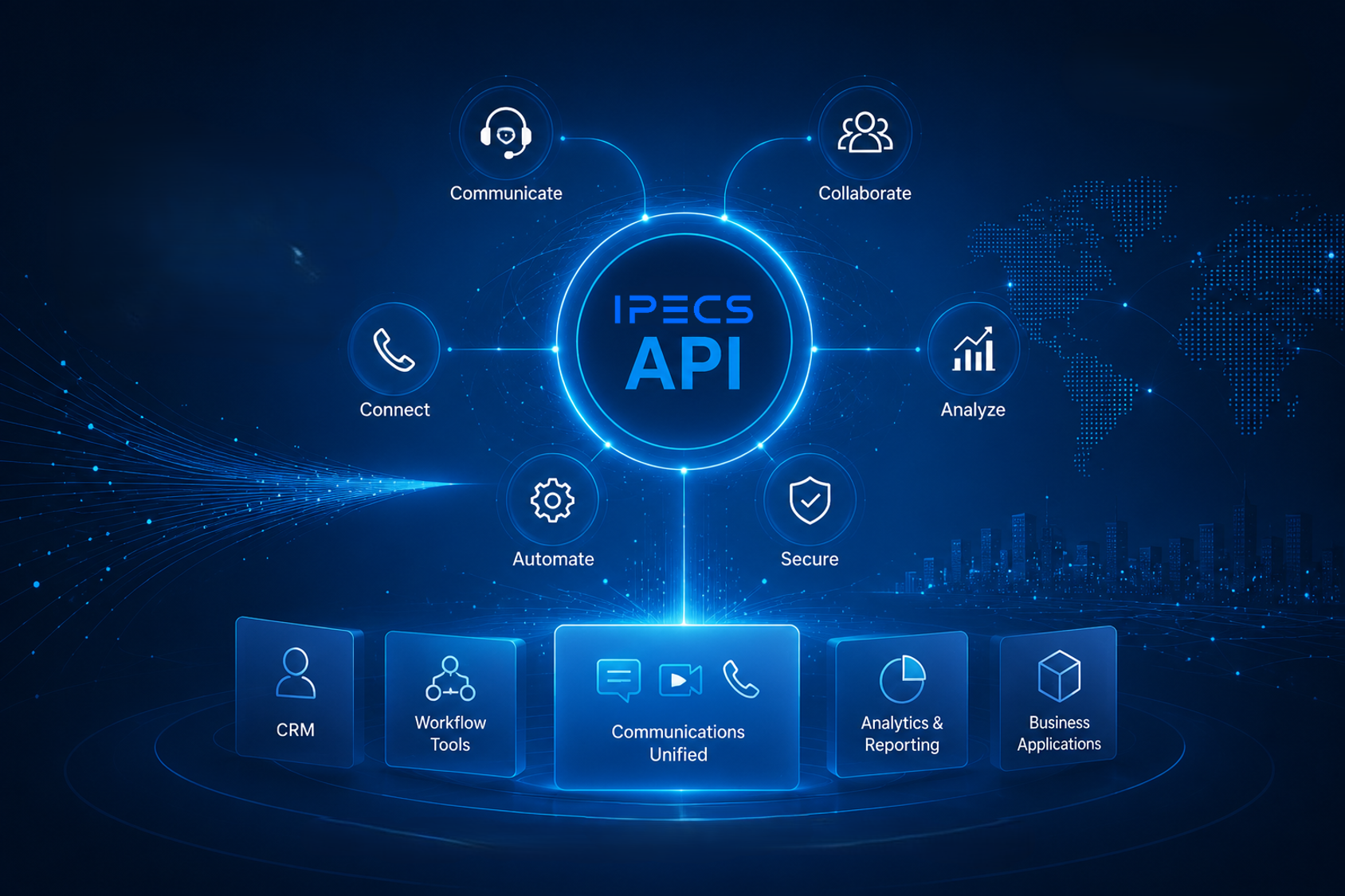
In many organizations, communication is constant, calls, messages and customer interactions happen throughout the day, across teams and locations. Yet despite this, communication often remains separate from the systems that drive the rest of the business.
Customer data sits in CRM platforms, workflows run in other tools and reporting happens elsewhere. As a result, valuable information generated through everyday interactions is not always captured or used effectively.
This creates friction with teams switching between systems, manually logging activity and making decisions without full context. Integration addresses this by connecting communication to the wider business environment. This is where the IPECS API plays an important role.
Connecting communication to business context
Communication generates data, but that data only becomes useful when it is accessible in the right place.
The IPECS API enables communication data to be shared with CRM systems, business applications and reporting tools. This creates a more complete view of customer interactions and operational activity.
For example, integrating IPECS with a CRM system allows call activity to be logged automatically against customer records. Teams can immediately see who is calling, review interaction history and respond with greater context.
This reduces reliance on manual processes and ensures that important information is consistently captured and available.
Streamlining workflows and improving efficiency
Disconnected systems slow down everyday operations. Switching between platforms to find information or update records introduces delays and increases the risk of errors.
By connecting communication with existing systems, the IPECS API supports more efficient workflows. Information moves between platforms without duplication and routine tasks can be handled more consistently.
In practical terms, this can include:
- Automatic call logging
- Faster access to customer information during interactions
- More efficient handling of service requests and sales inquiries
These changes reduce administrative effort and allow teams to focus on more valuable work. Over time, this leads to more efficient operations and better use of internal resources.
Turning communication into actionable insight
Integration also changes how organizations understand their performance.
When communication data is connected to analytics and reporting tools, it becomes possible to identify patterns, trends and areas for improvement. Call volumes, response times and interaction outcomes can be viewed alongside broader business metrics.
This provides a clearer picture of how communication impacts operations. Teams can identify where delays occur, where opportunities are missed and where processes can be improved.
Instead of relying on assumptions, decisions are supported by evidence. This enables a more proactive approach to managing performance and improving outcomes.
Improving customer experience through better context
Customer experience is shaped by how well organizations manage interactions.
When communication systems are integrated with customer data, teams can respond with greater awareness. They can see who is calling, understand previous interactions and provide more relevant responses.
This reduces the need for customers to repeat information and helps resolve issues more efficiently. It also supports a more consistent experience across teams, regardless of who handles the interaction.
Integrations with partner solutions and messaging platforms can extend this further, enabling more flexible engagement across channels while maintaining visibility and control.
Enabling partner-led solutions
A key strength of the IPECS API is its flexibility.
Rather than relying on a fixed set of integrations, partners can build solutions that align with specific customer requirements. This includes connecting IPECS with CRM platforms, workflow tools and industry-specific applications.
In practice, this allows partners to solve real operational challenges. For example, integrating communication with a customer database can improve response times and ensure that sales or service teams have the information they need at the right moment.
It also creates opportunities to deliver more tailored solutions, helping partners differentiate their offering and add measurable value for customers.
Supporting future capabilities
As communication technology continues to evolve, integration will become even more important.
Capabilities such as AI-powered transcription, workflow automation and advanced analytics depend on the ability to move data between systems. The IPECS API provides a foundation for these developments by enabling communication data to be accessed and used more effectively.
While these capabilities will continue to develop over time, the underlying requirement remains the same. Communication must be connected to the wider business in order to deliver value.
Turning interaction into business value
The role of communication is changing. It is no longer just about enabling conversations but about supporting better outcomes across the business.
By connecting communication with CRM systems, applications and analytics tools, organizations can make better use of the information they already generate. This improves visibility, supports more informed decision-making and helps teams operate more efficiently.
The IPECS API enables this shift in a practical and flexible way. It allows businesses to move from disconnected systems to connected workflows, where communication plays an active role in driving performance.
As organizations continue to look for ways to improve efficiency and respond more effectively to customers, integration will remain a key priority.
To learn more about how the IPECS API can support your business or your customers, speak to your local IPECS provider.