On Tuesday, March 31, we hosted our first IPECS insights session of 2026. These monthly sessions bring together our global partner community to share success stories, strategies and the latest market developments.
This month’s edition was presented by PP Team at IPECS. KS Choi, Head of PP Team and the Product Mangers, James Kim, Soyoung Lim and Sungbum Park at iPECS presented the overview of IPECS Cloud sprint 26.04.
Advancing Messaging, AI, and Platform Innovation for a New UC Experience
iPECS Cloud has unveiled its latest strategic direction, highlighting a continued commitment to innovation in response to the rapidly evolving communications landscape. During a recent partner webinar, the company shared key updates and future priorities aimed at enhancing its cloud communications platform.
A central theme of the session was the transition to a more agile, sprint-based release model. This approach enables faster delivery cycles, allowing the company to respond more effectively to market demands while continuously incorporating partner and customer feedback. The shift reflects a broader effort to improve both speed and flexibility in product development.
Expanding Beyond Voice with Integrated Messaging
One of the most notable developments is the expansion of communication channels beyond traditional voice. iPECS Cloud is moving toward a more integrated digital communication environment, incorporating web chat and WhatsApp mobile messaging into a unified platform.
This evolution allows customers to engage with businesses through multiple channels, while enabling agents to manage conversations seamlessly within a single interface. Designed with simplicity and flexibility in mind, the solution aims to lower the barrier to entry, particularly for small and mid-sized environments.
Looking ahead, the platform is expected to further enhance customer experience by enabling more fluid transitions between channels, including the ability to escalate conversations while maintaining full context.
AI Capabilities Moving Toward Practical Application
Artificial intelligence is also emerging as a key pillar of the platform’s evolution. The focus is shifting from standalone features to embedded, workflow-driven AI capabilities that deliver tangible value in everyday operations.
While current developments focus on building the foundational architecture, the next phase will introduce AI-powered features such as transcription, summarization, and sentiment analysis. These capabilities are expected to be delivered through a more flexible OPEX-based consumption model, enabling organizations to adopt advanced AI functions without significant upfront investment.
By integrating these features directly into user workflows through iPECS ONE and Analytics, iPECS Cloud aims to move beyond experimental use cases and make AI a practical, accessible tool for enhancing communication and productivity.
Strengthening the Platform: APIs, Security, and Operational Efficiency
On the platform side, iPECS Cloud is reinforcing its foundation through API ecosystem expansion and operational improvements. Efforts are underway to streamline API structures and enhance developer accessibility, making it easier to integrate with external systems.
At the same time, improvements in areas such as
- Enhanced resiliency
- Security monitoring and management
are helping to strengthen overall system reliability and scalability.
Enhanced administrative controls and proactive threat detection capabilities further reflect a growing emphasis on enterprise-grade security and governance.
A Strategic Shift Toward Continuous Innovation
The direction outlined during the webinar signals more than incremental updates—it represents a structural evolution of the platform.
From messaging-centric communication and embedded AI to agile development practices, iPECS Cloud is positioning itself to adapt continuously in a dynamic market environment.
A company representative noted that collaboration with partners will remain a key driver of innovation, adding that the goal is to deliver a more flexible, scalable, and future-ready communications platform.
“IPECS Insights is a forum where we can collaborate, share ideas, and learn best practices to drive the success and growth of the IPECS brand and portfolio globally. We will invite subject matter experts to lead each of the IPECS Insights sessions, which will last around 1 hour and cover a range of technical and marketing focus areas.”
On Tuesday, November 25th, we hosted another iPECS Insights session. These monthly sessions bring together our global partner community to share success stories, strategies and the latest market developments.
This month’s edition was presented by Brian Shin, Account Manager at iPECS, and Liam Tracey, Managing Director of Goldstar Telecom, our long-standing partner in Ireland. Together, they shared valuable insights into Ireland’s evolving UCaaS landscape and highlighted two major customer success stories that show the power and versatility of iPECS solutions.
The Market and Goldstar Telcom
Brian opened the session with sharing an overview of Goldstar’s background and a summary of the global and regional UCaaS markets.
Goldstar has been one of iPECS’s most loyal and innovative partners for over 40 years, earning a reputation for delivering high-quality communication solutions as Ireland’s sole distributor of iPECS on-prem and cloud solutions. They are leaders in reliable, flexible IP and hybrid phone systems and have a reputation of deep expertise in creating powerful, cohesive communication platforms.
Globally, the UCaaS market continues to show strong momentum, with projections of 18% – 24.9% CAGR through 2030 and a long-term potential projection that exceeds 136 billion USD. We are seeing an acceleration in on-prem to cloud migration being driven by hybrid work and AI.
Looking at regional market dynamics, Asia-Pacific remains the fastest-growing area, while Europe continues to focus on sovereignty and regulatory compliance. 94% of large enterprises in North America have embraced cloud-first policies with aggressive migration to cloud-native environments – it is a mature market with over 65% cloud adoption rate.
Brian highlighted that Ireland’s ICT market is valued at around €21 billion, with UCaaS representing one of its fastest-growing sectors. The market is competitive and is dominated by global cloud powerhouses such as MS Azure, Google Cloud and AWS. The UCaaS specialists include MS Teams, Zoom, Cisco Webex and Ring Central. The market is set to accelerate even further as more organizations look to support modern work environments.
While around half of organizations still operate on-premise, cloud adoption is rising steadily, supported by national investment in digital infrastructure. Many businesses are now adopting hybrid models to balance flexibility, compliance and cost control.
Challenges do remain, including legacy infrastructure and financial or regulatory barriers to full migration, especially in the healthcare sector. However, this also represents a significant opportunity for iPECS partners, as iPECS solutions are uniquely positioned to support on-premise, cloud and hybrid environments.
Brian encouraged partners to continue expanding their portfolios with iPECS Cloud and vUCP, emphasizing that customers increasingly demand integrated tools that boost productivity and engagement.
Goldstar’s cloud journey and strategy
Next, Brian highlighted how Goldstar has evolved alongside the market dynamics. The company has achieved robust year-on-year growth in its cloud business, averaging 36% CAGR, supported by a clear focus on monthly recurring revenue and subscription-based services.
Aligned closely with iPECS strategy, Goldstar’s approach centers on:
- Driving the continued transition to cloud
- Growing recurring revenue
- Increasing user attachment rates and ARPU
- Preparing for new commercial models in partnership with iPECS
This focus has helped Goldstar strengthen its leadership position in the Irish market and maintain its reputation for reliability and innovation.
Case Study 1 – Qualvecom
The second half of today’s Insights session was led by Liam who began by introducing the first case study – Qualvecom.
Qualvecom is one of Ireland’s largest distributors of automotive components, headquartered in Dublin. With a team of 175 employees and a large mobile workforce operating over 40 delivery vans daily, seamless communication is critical to their operations.
Qualvecom’s legacy system struggled to keep pace with demand. They needed a modern, unified solution capable of handling high call volumes and connecting mobile workers efficiently. Goldstar deployed iPECS Cloud, integrating ACD, iPECS Analytics and iPECS ONE into a single, easy-to-manage environment.
Key benefits included:
- Maintained and enhanced the business’ single-call resolution promise through advanced call management tools.
- Improved visibility and accountability through analytics and call reporting.
- Enabled remote and mobile workers to stay connected and productive through iPECS ONE.
- Protected their existing investment by reusing current handsets.
- A smooth, low-disruption upgrade path from ISDN to VolP.
- Reliable local support gives peace of mind.
The impact on the business was significant. Remote workers now have the same access and functionality as office-based staff, customer calls are routed more effectively, ensuring faster resolution, managers can track performance and call data to optimise staffing and training and the solutions offers simpler day-to-day use for employees, reducing time spent on technical issues.
Case Study 2 – Waterville Golf Club
The second case study showcased a very different environment: Waterville Golf Club in County Kerry, one of Ireland’s most prestigious golf destinations. Founded in 1889 and recently modernized, the club needed a communications upgrade to match its world-class reputation.
The site’s legacy ISDN-based infrastructure lacked reliability and offered no connectivity between the main club and its associated accommodation, Waterville House.
Goldstar implemented an iPECS UCP 100 system, supported by 19 IP handsets (1010i, 1020i, and 1030i with 1024idss), creating a fully IP-based environment with integrated desk-to-desk dialling across both premises.
The results were clear:
- The modern, future-proof IP system now matches the high standard of the venue.
- It offers greater reliability and resilience, which was demonstrated when the system was restored within 12 hours after a lightning strike.
- Cost savings by moving away from ISDN and reducing rental charges.
- The scalable solution now meets the needs of both the golf course and the accommodation site.
- Reputation is enhanced through reliable communications for guests, including international visitors.
The system has ensured that Waterville has seamless integration between the golf course operations and Waterville House accommodation. The reliable communication channels for staff and guests have improved customer experience and the flexible system can grow with the business and adapt to its future needs. Ultimately, Waterville have experienced reduced downtime and gained confidence from the rapid support and recovery provided by Goldstar if issues occur.
Closing remarks
Brian brought the session to a close by thanking Liam for sharing these outstanding examples of customer success. Together, the two case studies illustrated how iPECS empowers partners to deliver value in every type of environment – from large-scale distributors to luxury hospitality.
As Brian summarized, the Irish market is rapidly accelerating toward cloud-based communications, but hybrid flexibility remains vital. iPECS and its partners, such as Goldstar, are ideally placed to meet these needs through technology that combines innovation, reliability and local expertise.
Driving Partner Success with the Latest iPECS Updates
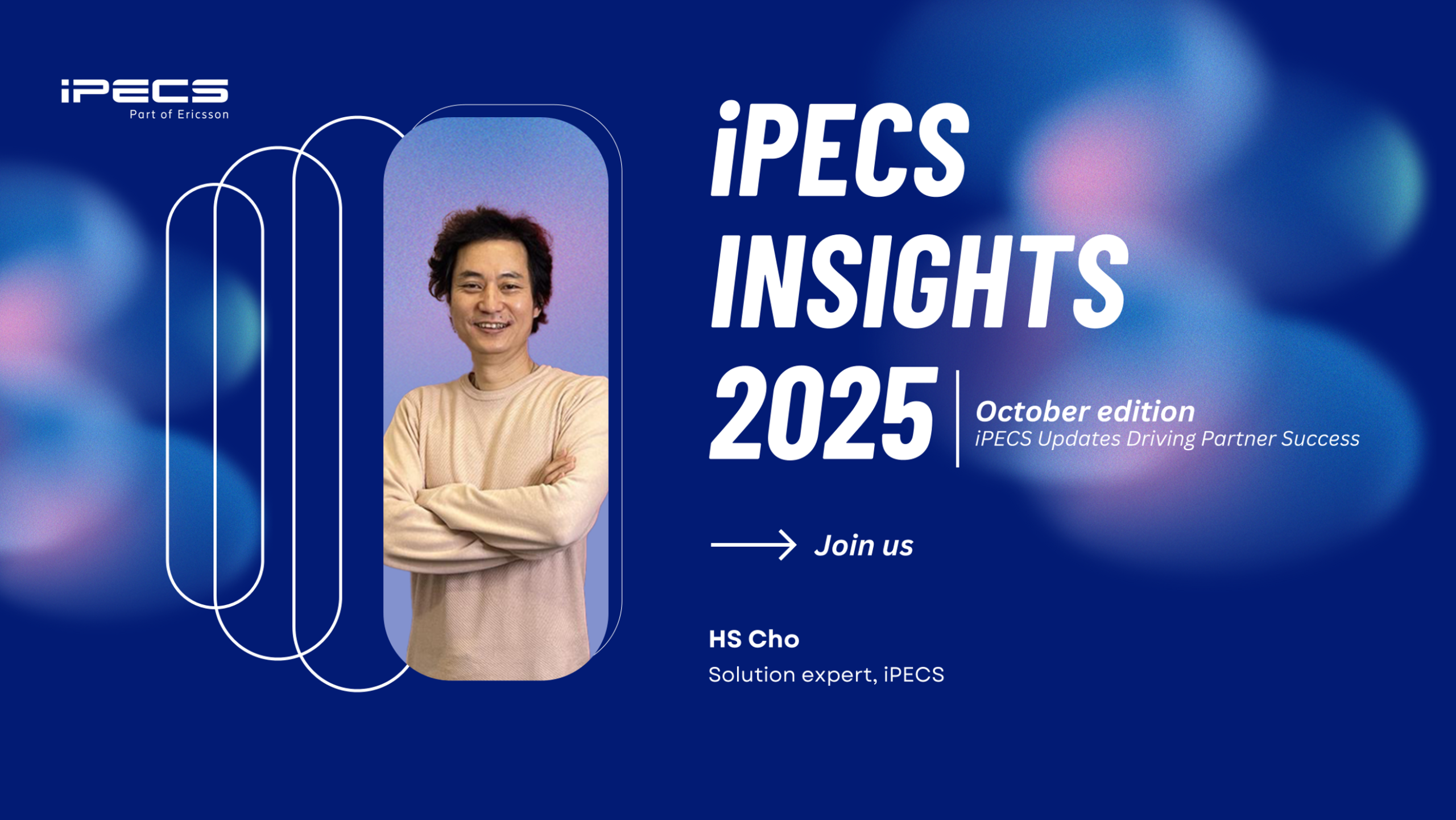
On Tuesday, October 28th, we hosted another iPECS Insights session. This is our monthly opportunity to connect with global partners, share updates, and explore how we can continue driving success together.
This month’s session was hosted by HS Cho, Solution Expert at iPECS, who provided an in-depth look at the latest updates across both the Unified platform (version 6.2.11) and iPECS Cloud. The session highlighted a series of innovations that further enhance usability, security, and collaboration for partners and end users alike.
New features in Unified 6.2.11
The latest version introduces two standout features that reflect our continued commitment to solving real-world customer challenges and expanding platform capability.
Automated Park and Page
“Park and Page” has long been a useful feature for managing incoming calls in busy environments, enabling users to park an active call and notify another user, giving them the ability to retrieve it. However, in locations without a dedicated receptionist, it can be difficult to manage manually.
The new automated Park and Page functionality addresses this by streamlining the process, allowing calls to be automatically parked and broadcast to the relevant team or extension. This enhancement makes it easier for organizations of all sizes to handle calls efficiently, even with limited administrative staff.
Silent Duress Alert – A True Game Changer
Another major feature in this release is the Silent Duress Alert, designed for emergency scenarios such as armed robberies or other security incidents when normal emergency calls are a risk. When triggered, the system can automatically place a call to emergency services and play a pre-recorded alert message.
This functionality is highly flexible. For example, in hotel environments, alerts can be configured per room or location. It can also send notifications by email and integrate with iPaaS (Integration Platform as a Service) solutions to trigger automated workflows through webhooks. This means partners can easily link Silent Duress to systems such as CCTV or other safety and monitoring tools.
The alert can be activated via a pre-configured button or access code, making it both discreet and fast to use. As HS noted, this feature is a true market disruptor, offering a powerful new capability for safety-critical sectors such as retail, hospitality, and education.
iPECS Cloud: Accelerating innovation
HS then introduced a range of exciting updates to iPECS Cloud, reflecting iPECS’s ongoing drive to enhance flexibility, performance, and collaboration.
Enhanced Yealink provisioning
Provisioning for Yealink devices has been streamlined, reducing setup time and improving the experience for partners deploying cloud-based systems.
Shared Lines for iPECS ONE
One of the most significant new features is Shared Line support for iPECS ONE. This enables multiple users to share a single phone line — a highly requested enhancement that is ideal for collaborative environments, service desks, and problem-solving teams.
Previously available only on physical devices, shared lines are now fully supported within iPECS ONE on any device. The feature supports up to five shared lines, each configurable with distinct user assignments and permission settings. Users can easily view and manage shared lines directly within the web client interface, promoting seamless collaboration without the need for complex call transfers.
Boosting contact center capabilities
The update also brings a series of improvements to iPECS’s built-in contact center (CC) tools, further strengthening its competitiveness.
The wallboard has received a major upgrade, offering a dramatically improved user experience and enhanced reporting capabilities, including call recording transcription for deeper insights.
Another highlight is the introduction of ACD Wrap-Up Codes, enabling agents to rapidly categorize calls using pre-defined options. This simplifies post-call processes while providing richer analytics on call types and customer interactions.
Together, these upgrades deliver a more powerful and data-driven contact center solution, giving partners and customers new ways to optimize performance and service quality.
Agile innovation for the future
HS concluded the session by emphasizing iPECS’s move toward an agile development workflow, enabling faster delivery of new features and updates. This approach ensures that innovation reaches partners sooner and continues to align closely with market needs.
We would like to thank our global partner family for attending this exciting session as we continue to innovate and drive the evolution of iPECS. As HS summarized in his conclusion: “Let’s build the future together.”
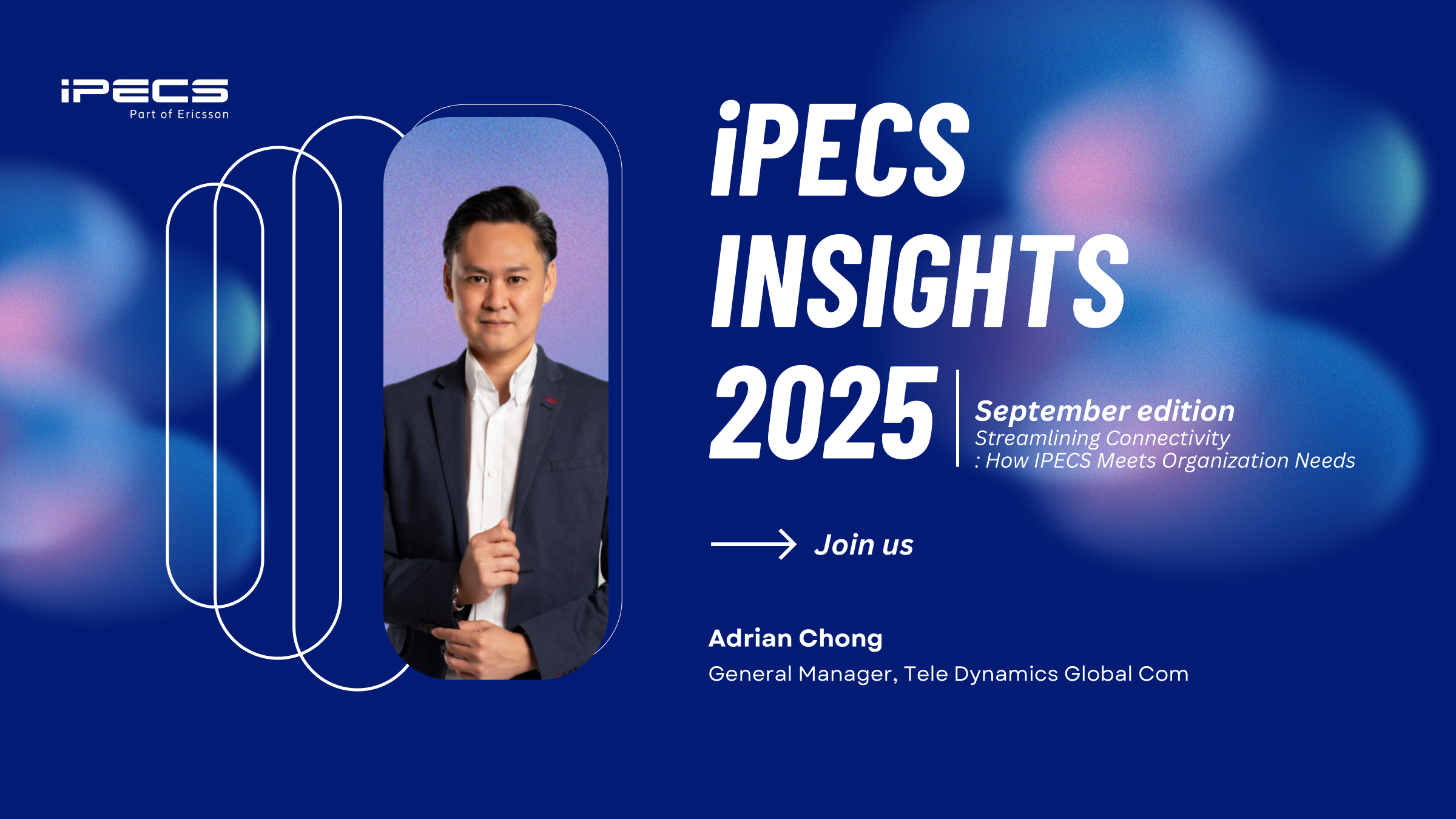
On September 23rd, 2025, we hosted another iPECS Insights session. These monthly webinars bring together our global partner community to share real-world success stories, insights, and inspiration from across the world.
This month’s session was presented by Adrian Chong, General Manager of Tele Dynamics Global Com, our long-standing partner in Malaysia. Adrian shared a fascinating and inspiring case study on how his team successfully deployed iPECS to transform communications for one of Malaysia’s most important public institutions.
Winning the Ministry of Education
The customer was the Ministry of Education of Malaysia, a prestigious and high-profile public sector client with a large user base. The project involved 8,000 extension users across five systems – a complex environment with significant demands for reliability, scalability, and ease of use.
The Ministry’s existing systems presented several challenges:
- They were still relying on PRI trunks, with limited flexibility.
- The directory was confusing and fragmented across five separate systems.
- Users had to remember and input a six-digit Node ID for logins, which was far from user-friendly.
- Redundancy was lacking, meaning outages posed a serious risk.
Why iPECS worked
The Ministry chose iPECS because it uniquely addressed their needs:
- Simplified management of extensions through a unified numbering plan (users only needed to remember each other’s extensions).
- High resilience with a second call server deployed across all sites, ensuring uninterrupted service in case of failure.
- Cost-effectiveness – the redundancy solution offered by iPECS was significantly more affordable than alternatives, with no compromise on quality.
- Modern infrastructure, with fibre cabling and improved system mounting, which delivered reliability and future scalability.
Building trust and proving value
One of the keys to success was the hands-on approach taken by Adrian and his team. Before the final decision was made, they conducted an in-person demonstration of the system, showing the call servers in action and proving how the extensions would work seamlessly in practice. This proof of concept won the trust of the Ministry and was pivotal in securing the project.
Adrian also emphasized the vital support provided by the iPECS team throughout the deployment. Ensuring configuration was fully optimized gave the Ministry confidence in both the technology and the partnership.
Partnership in action
The result is a prestigious win for iPECS and for our Malaysian partner. With 8,000 users in a critical public sector institution, this project demonstrates the power of iPECS technology and the value of strong partnerships.
As Adrian concluded, the Ministry of Education is not only impressed but delighted with their new solution. This project stands as proof of how iPECS, in partnership with our global network, continues to deliver reliability, scalability, and innovation to customers of every size and sector.
We would like to thank Adrian for a brilliant presentation, and to congratulate him and the Tele Dynamics Global Com team for delivering a great solution.
iPECS Product Roadmap 2025: updates & insights
On July 29th, 2025, we hosted another iPECS Insights session. These web-based talks bring together our global partner family and are designed to be informative, inspirational, and interactive.
For this month’s session, members of the iPECS PLM team shared valuable insights into the iPECS product roadmap following our recent Product Managers’ meeting.
Innovation is at the heart of iPECS, and it was a pleasure to share plans with our valued partners, to demonstrate how they can keep winning with iPECS.
Market dynamics
The presentation began with an overview of global market dynamics. This revealed some key trends, which will inform the roadmap as we keep moving iPECS forward.
The market remains strong, but growth dynamics are changing. Traditional telephony growth is now slowing in matured markets, and new growth is increasing driven by AI, customer experience enhancements, and improvements to the entire communications ecosystem. Our presenters then detailed how the iPECS roadmap is shaped by these trends, empowering our partners to remain at the forefront of enterprise communications.
The rise of AI
Businesses of all sizes are increasingly leveraging the power of AI, and the market is responding with more and more solutions and features that use AI.
As our roadmap showed, iPECS is enabling many innovations in this area. We are continuing work on iPECS AI, which will operate natively in iPECS ONE and Analytics next year, with features including AI-powered call transcription. This is one of many ways in which iPECS is enabling our partners to innovate and act at the cutting edge of our industry.
CX and CCaaS
Another key trend is the growth of solutions centered on CX (customer experience), including contact center features such as omnichannel and automations.
iPECS is already enabling this through key integrations with CCaaS providers such as Daktela and Braxtel, enabling our partners to deliver omnichannel contact centers and CX improvements in many markets.
iPECS will also be introducing more contact center features natively on the cloud platform.
Integrations and the technology ecosystem
Another key growth driver in the market is the trend towards tighter integration between key technologies, such as UC to CRM. As cloud services expand, there is a greater need to unify them.
We have already seen many successes that use the iPECS API to deliver bespoke integrations, and another major project is to continue to enhance the iPECS API. This will enable more partners to offer more unique and innovative integrations, to make iPECS a central part of the technology ecosystem. Our improvements will cover iPECS ONE, iPECS Analytics, Call Recording and more.
As more and more businesses look to bespoke integration (either to a niche CRM or to automate a unique process), it will be vital for our partners to be able to cater to that demand, for both new business and the retention of existing customers. Our improvements to the iPECS API will enhance their ability to do this.
Q&A and conclusion
We concluded the presentation with a Q&A answering during PM meeting, which were highly engaging and relevant, before concluding the presentation.
We would like to thank all our partners for their engagement and contributions, both to this session and on a year-round basis. Our partners and their requirements are central to the iPECS roadmap, and help us to ensure that our solutions remain relevant, innovative and tailored to the end user.